Tuesday, August 9, 2011

$360 later....


Well, $180 was for the 10,000 mile service.

But the rest - The nasty rodents chewed up the wiring to my left turn signal, and also the windshield wiper hose. Rat bastards!

Monday, August 8, 2011

Blueberry buttermilk tart

Beautiful big blueberries.

Perfect for a summer dinner party.


Blind-bake a tart shell. Fill with one layer of fresh blueberries.


Make a filling -

1 cup buttermilk
1/2 cup sugar
1 tablespoon grated lemon rind
1 tablespoon lemon juice
1/2 teaspoon salt
1 teaspoon vanilla
2 tablespoons flour
3 egg yolks


Mix it all up in a blender or food processor, pour into tart shell with blueberries, and bake at 375 for 35 minutes. After it cools....sprinkle with confectioner's sugar.


And EAT!

Rat bastards

 Rats!!

I opened my car's hood to fill up the windshield washer, and was shocked to see the engine compartment filled with grass and leaves.


Something was nesting in my car! Not only that, it chewed through the hose for my windshield washer - that was why I didn't have any fluid.
Nest in the garbage can - we were too freaked to take a photo of it in the car
I told [The Man I Love] to check his car, and we found this NEST inside, built on top of the battery. 

So are there RATS living in our cars, or some other rodent? We think that while we were gone to London and Chicago, and the cars were idle, they moved in. Here in Topanga the usual suspects are brown rats (rattus norvegicus) , roof rats ( rattus rattus) , ground squirrels (ostospermiphilus beechyi) or an ordinary squirrel (sciurus niger).

But as far as I'm concerned, they're all RAT BASTARDS!

My beautiful little car! I'm taking the car in for service this morning to find out how bad it is.

Saturday, August 6, 2011

Pink Saturday - A pink pram on Brick Lane

 Pink Saturday - Beverly at the blog "How Sweet the Sound" hosts Pink Saturday. Let the color pink inspire you! 

There's a lot of street art in East London
 Brick Lane is located in London's East End. It's always been a neighborhood of immigrants - starting with French Huguenot refugees in the 17th century, come to work at weaver's shops, then Irish and Ashkenazi Jews in the 19th century. In the 20th century, Bangladeshi immigrants came to Brick Lane, and today the street is lined with curry shops.


There's been a market on Brick Lane since the 17th century - and nowadays, it happens on Sundays. You can find anything at the Brick Lane Market,  from exotic produce to used furniture to cheap sunglasses.


Friday, August 5, 2011

All webbed out - how about some pie?

Sorry for the light posting. I've been working on my employer's website design and content, and after a day of that, coming home and posting online is not the first thing that comes to my mind.


But here's something sweet from July to keep your interest up.


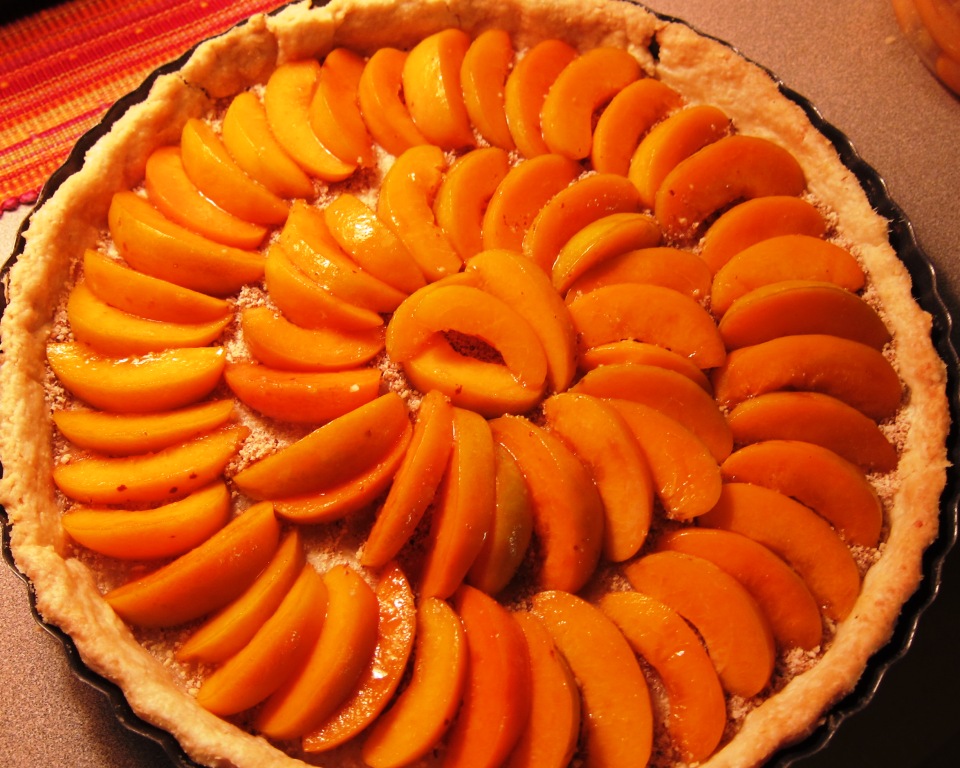
Apricot almond tart!

Fresh almonds in the husks - aren't they beautiful?
On a trip to the Wednesday Farmer's Market, I met a vendor selling almonds. They also sold sliced almonds, almond meal, almond flour and marzipan.


Almond flour mixed with regular flour (at about 1 - 3 ratio) makes a tasty and tender pie crust.


And what goes better with almonds than fresh apricots?


A French-style tart, the fruit baked with an egg-and-cream custard, then topped with slivered almonds, made a perfect dessert for July 14th, the French national holiday.


Enjoy that while I go back to slaving over tables, I-frames, pixels and metadata!

Thursday, August 4, 2011

Century Plant again

Someone in the comments asked about the Century Plant. This large specimen of Agave americana grows in the front yard of a neighbor here in our rural Santa Monica Mountain community. This spring, it sent up a tall flower-shoot, to bear the only flowers this thirty-something year old plant will bear before it dies.


Yes, we can finally say it bloomed! Here we are, three months later. It has branched out these greeny-yellowy blooms. They are swarming with honey bees.

I wonder where their hives are, and what agave honey tastes like?

It is a magnificent plant.

Tuesday, August 2, 2011

Summer sunset

Click to "embiggen"

 The sun sets in the saddle of the mountain on a very hot summer evening, and sets the clouds aflame.

Monday, August 1, 2011

Illinois wildflowers

Campanula americana, American bellflower
I lived in the Fox River Valley as a kid from the ages of seven to twelve. Our home in Batavia, Illinois, was in a new subdivision, and our house was surrounded by vacant lots that allowed me to safely explore wild habitats ranging from deep deciduous woods to prairie to swampy wetlands. With a little pocket wildflower guide, I learned to identify the flowers and trees around me.

On our recent trip to see family, I enjoyed walking the Fox River Trail - as its name implies, it follows the river, and links the parks and nature preserves of the small towns along the way. It was a treat to see again the wildflowers I remembered from childhood, and to find new ones to identify - or to puzzle on.

Queen Anne's Lace, or wild carrot, Daucus Carota
One of the most recognizable flowers is Queen Anne's Lace. This weedy but pretty plant is not an Illinois native, but was introduced to the United States from Europe.

Impatiens capensis
Another European import, Jewelweed, gets its common name because its leaves, when held underwater, appear silver, or "jeweled." Its botanical name is Impatiens capensis. I remember this plant from my childhood, but I don't remember its North American native cousin, Impatiens pallida, with pale yellow flowers.

Impatiens pallida
I found the two species growing together in the moist woodsy paths at the Fabyan Forest Preserve.

Purple loosestrife, Lythrium salicaria
 The moist and marshy edges of the river are a perfect habitat for another invasive weed, purple Loosestrife, or Lythrium salicaria.


An almost look-alike to loosestrife is Liatris - each has a spike of lavender-pink flowers, but there the resemblance ends. Loosestrife is native to the old world, and it's become a dangerously invasive weed, especially in waterways, crowding out native plants and even native animals like amphibians and insects. The much more benign Liatris spicata, or Purple Gayfeather, is a native prairie plant.

Some of the plants I saw on my riverside walks I was unable to identify.


This is obviously a wild onion of some kind, with its gracefully drooping umbrels of flowers, but which one?


Is this catchfly, or Silene carolinana?

Click to "embiggen"
And this one was a real puzzle for me. Very tall, up to six feet, with huge palmate leaves. Sprays of small white flowers. It grew in the deep shade near the railroad trestle. I couldn't identify it in any of the online data bases - not at all. Does someone want to give it a try?

We're back

We're back in Los Angeles after a trip to see family in the Chicago area. Here's a photo of a goldfinch I was able to snap, during a morning walk along the Fox River.